Last Updated: October 23, 2026
Quick Summary
The best ways to maintain household appliances include cleaning refrigerator coils every six months, running monthly cleaning cycles on washing machines, and cleaning dryer lint traps after every load. These routine tasks prevent costly failures, extend appliance lifespan, and catch problems early before they require emergency repairs.
Keeping your household appliances running smoothly requires consistent care, yet many homeowners skip maintenance until something breaks. Preventive maintenance saves money, extends appliance lifespan, and prevents emergency repair situations. The best ways to maintain household appliances start with understanding that small, routine actions prevent costly failures down the road.
Regular maintenance catches problems early. A refrigerator that’s losing cooling efficiency, a washing machine with worn seals, or a dryer with lint buildup all signal trouble ahead. Addressing these issues now keeps your appliances functioning properly and reduces the risk of sudden breakdowns that require emergency service calls.
Your refrigerator runs 24/7, making it one of the most hardworking appliances in your home. To maintain household appliances like refrigerators, focus on three key areas: coils, seals, and temperature settings.
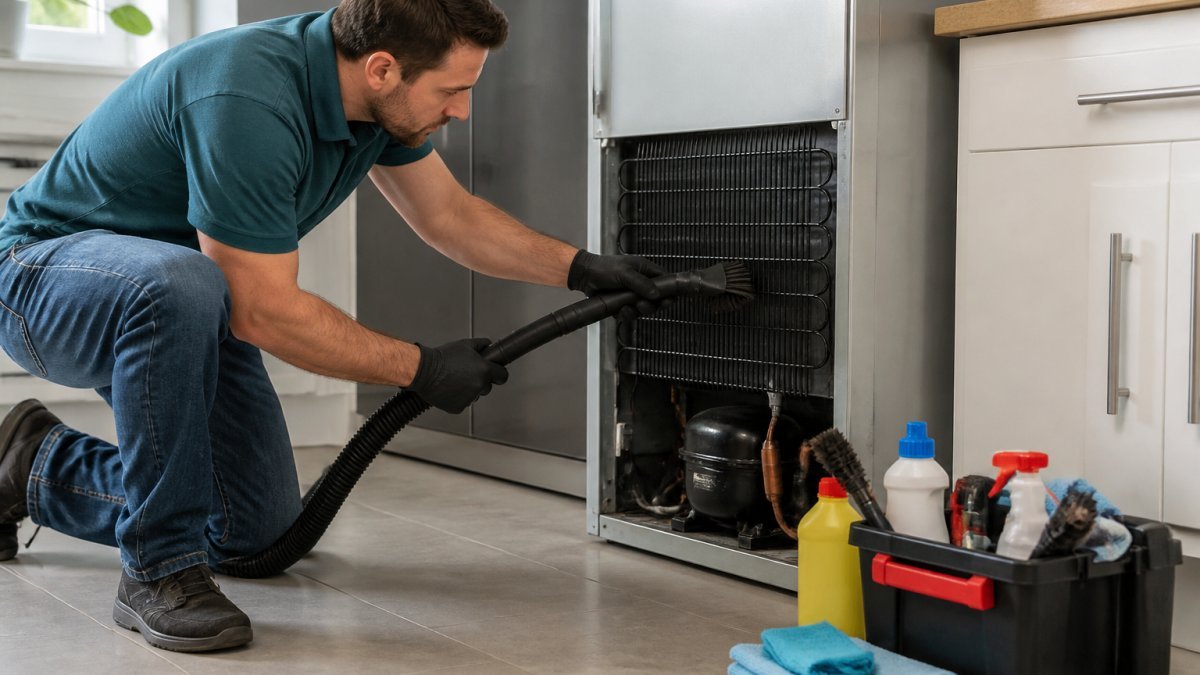
Clean the condenser coils every six months. These coils sit behind or beneath your refrigerator and release heat as part of the cooling cycle. Dust and debris accumulate on them over time, forcing the compressor to work harder and reducing efficiency. Unplug the unit, locate the coils, and use a soft brush or vacuum with a brush attachment to remove buildup gently.
Check door seals regularly. Press a dollar bill halfway into the closed door. If it slides out easily, the seal isn’t tight enough. Dirty or damaged seals let cold air escape, causing the compressor to cycle more frequently and use more energy. Clean seals with warm soapy water, and replace them if cracking or warping appears.
Keep the interior organized. Overcrowding blocks airflow, forcing your refrigerator to work harder to maintain temperature. Leave space between items and don’t block vents. Check that the temperature is set to 37-40°F for the fridge and 0°F for the freezer, as warmer settings reduce cooling effectiveness (the FDA).
Washing machines handle heavy use, and small maintenance steps prevent leaks, odors, and mechanical failure. To maintain household appliances like washers, establish a routine around cleaning, checking seals, and running diagnostic cycles.
Run a cleaning cycle monthly. Most modern machines have a self-cleaning setting. If yours doesn’t, run a hot water cycle with two cups of white vinegar or a commercial washing machine cleaner. This removes detergent residue, mold, and mineral deposits that cause odors and reduce cleaning performance.
Inspect hoses for wear. Rubber hoses deteriorate over time, becoming brittle or developing small cracks. Check inlet hoses (the ones bringing water in) every six months for bulges, cracks, or leaks. Replace them every five years as preventive maintenance, even if they look fine. A burst hose can cause significant water damage quickly.
Leave the door open between loads. Moisture trapped inside creates an environment for mold and mildew. Leaving the door or lid open for several hours after each load allows the drum and seals to dry completely.
Use the correct amount of detergent. Too much soap creates excess suds that can damage the machine’s internal components and leave residue on clothes. Follow the manufacturer’s recommendations, and use high-efficiency detergent if you own an HE machine.
A clogged dryer vent is both a fire hazard and an efficiency problem (Overheated Clothes Dryers Can Cause Fires). Dryer vent cleaning should happen at least twice yearly, more often if you have a large household or use your dryer frequently.
Clean the lint trap after every load. This is the fastest, easiest maintenance step and the most important one. Lint buildup restricts airflow, causing clothes to dry slowly and generating excessive heat inside the drum.
Inspect the external vent hood. Go outside and check that the vent flap opens freely when the dryer runs. Lint, bird nests, or debris can block the opening, forcing hot, moist air back into your home instead of outside. Clear any blockages and ensure the flap moves smoothly.
Check the exhaust duct. If your dryer exhausts into a flexible aluminum duct, inspect it for kinks, crushing, or detached sections. Straighten kinked ducts and reattach any loose connections. For best airflow, use rigid metal ducting when possible, as it resists crushing and lint accumulation better than flexible alternatives.
Consider professional dryer vent cleaning annually. A technician can access the full vent system, including sections inside your walls, and remove lint that household cleaning misses. This service is especially important if your dryer takes longer than 45 minutes to dry a full load, as it signals restricted airflow.
Staying organized with maintenance prevents you from forgetting critical tasks. A simple checklist keeps your best ways to maintain household appliances consistent and timely.
| Task | Frequency | Appliance | Notes |
|---|---|---|---|
| Clean condenser coils | Every 6 months | Refrigerator | Unplug before cleaning |
| Check door seals | Monthly | Refrigerator | Replace if cracked |
| Run cleaning cycle | Monthly | Washing Machine | Use vinegar or cleaner |
| Inspect inlet hoses | Every 6 months | Washing Machine | Replace if bulging |
| Clean lint trap | After every use | Dryer | Takes 30 seconds |
| Inspect vent hood | Every 3 months | Dryer | Check for blockages |
| Professional vent cleaning | Annually | Dryer | Schedule in fall or spring |
Post this checklist on your refrigerator or set phone reminders for quarterly tasks. When maintenance becomes routine, you catch problems early and avoid expensive emergency repairs.
Even well-intentioned homeowners make mistakes that damage appliances or reduce their effectiveness. Understanding these errors helps you protect your investment.
Ignoring unusual noises or smells. Strange sounds from your refrigerator, grinding from your washer, or burning smells from your dryer aren’t normal and shouldn’t be ignored. These are early warning signs that something needs attention. Addressing them quickly prevents small issues from becoming major failures requiring professional repair.
Overloading washing machines and dryers. Cramming too many clothes into one load puts stress on motors and mechanical components. Follow the manufacturer’s capacity guidelines. Your clothes will actually get cleaner with smaller loads, and your appliances will last longer.
Using incorrect detergent. Using regular detergent in an HE washing machine creates excessive suds that can damage the machine. Using too much detergent of any kind leaves residue and forces the machine to work harder. Read your appliance manual and follow recommendations exactly.
Neglecting the space around appliances. Refrigerators need airflow around coils to release heat properly. Dryers need clearance for safe venting. Washers need access for hose inspection. Don’t push appliances tightly against walls or into corners. Leave at least a few inches of space for maintenance access and proper airflow.
Attempting complex repairs yourself. Opening an appliance to troubleshoot internal problems can void warranties and create safety hazards. When something breaks beyond basic maintenance, professional diagnosis prevents costly mistakes and ensures repairs are done correctly.
Knowing when to handle maintenance yourself and when to call a professional protects both your appliances and your safety. Some issues require expert diagnosis and repair.
Call a professional if your refrigerator isn’t cooling properly despite clean coils and correct temperature settings. The compressor, expansion valve, or refrigerant system may need attention, and these components require specialized tools and expertise to repair safely.
Washing machine leaks, unusual vibrations, or failure to drain indicate internal problems that need professional attention. Water damage can spread quickly, making fast diagnosis critical. A technician can identify whether seals, pumps, or drum bearings need replacement.
If your dryer isn’t heating, takes longer than 45 minutes to dry a full load, or makes unusual noises, professional service is warranted. Heating element failure, thermostat problems, or drum bearing wear all require professional repair. Ramex ProFix provides upfront estimates before any work begins, so you understand the scope and cost before committing to repairs.
Many homeowners hesitate to call for service because they’re unsure whether repair is worth the cost. A professional diagnosis clarifies whether repair or replacement makes sense. When you’re uncertain about an appliance’s condition, the Federal Trade Commission provides guidance on evaluating repair versus replacement decisions. Getting a professional opinion from a trusted technician prevents costly mistakes and gives you confidence in your decision.
Regular maintenance on your household appliances prevents emergencies, extends equipment life, and keeps your home running smoothly. The best ways to maintain household appliances combine simple monthly tasks with seasonal professional attention. When problems do arise, professional diagnosis ensures repairs are done right the first time. Ramex ProFix delivers same-day and next-day service with upfront estimates and expert diagnostics, so you can make informed decisions about your appliances without risky DIY repairs. Contact Ramex ProFix to request service. Book a Repair today and let our team handle your appliance maintenance and repair needs.
Maintenance frequency depends on the appliance type and usage. Refrigerators need coil cleaning every 6-12 months, washing machines require monthly drain checks, and dryer vents need cleaning every 3-6 months. Monthly visual inspections of all major appliances catch early signs of wear. Create a maintenance calendar for your home and mark these intervals to stay consistent.
Cleaning and maintaining proper ventilation is critical across all appliances. For dryers, vent cleaning prevents fire hazards and improves efficiency. For refrigerators, coil cleaning maintains cooling performance. For washers, drain line maintenance prevents mold and odors. These tasks directly impact safety, performance, and appliance lifespan more than any other single maintenance activity.
Yes, consistent maintenance significantly extends appliance lifespan. Regular cleaning, filter replacement, and component inspection prevent buildup, reduce strain on motors and compressors, and catch small issues before they become expensive failures. Many homeowners find that an annual maintenance investment can save thousands in premature replacement costs.
Call a professional when you notice unusual noises, leaks, temperature inconsistencies, or performance changes. If you’re uncertain about internal components, electrical connections, or refrigerant systems, professional diagnostics provide clarity before attempting repairs. A professional inspection offers upfront estimates and expert guidance on whether repair or replacement makes sense for your situation.
A professional diagnostic helps answer this question with confidence. Generally, if repair costs exceed 50% of a new appliance’s price and the unit is more than 8-10 years old, replacement may be more economical. However, newer appliances with isolated component failures are usually worth repairing. Professional technicians can provide honest assessments without pressure to buy new.
Major appliances that require regular maintenance include refrigerators, washing machines, dryers, dishwashers, ovens, and water heaters. Each has specific maintenance needs: refrigerators need coil cleaning, washers need drain maintenance, dryers need vent cleaning, and water heaters need flushing. Creating a maintenance checklist for each appliance ensures nothing gets overlooked.
