Last Updated: October 25, 2026
Quick Summary
A dryer not heating usually stems from a clogged lint screen or blocked vent restricting airflow, which causes the dryer to shut off its heating system as a safety measure. If airflow is clear, the thermal fuse, heating element, or gas igniter has likely failed and requires professional replacement.
Before opening your dryer or inspecting internal components, unplug it or switch off its circuit breaker to prevent electric shock.
If you have a gas dryer, also shut off the gas supply valve, working near a live gas line is a serious risk.
Let the dryer cool for at least 15 minutes after running; interior components, especially the electric heating element, can cause burns.
Never disassemble major components like the heating element, thermal fuse, or igniter without professional training.
First confirm your dryer runs but produces no heat.
Run a heated cycle (not air dry) for 2-3 minutes, then feel inside. If the interior is cool or room temperature, your dryer is running but not heating, the core issue here.
If the dryer won’t turn on at all, it’s a power or motor issue, not heating.
If it runs and produces some heat but not enough to dry clothes in reasonable time, suspect restricted airflow or a partial heating failure, both covered below.
Understanding what type of heating problem you have helps narrow down the cause.
| Symptom | What It Means | Next Step |
|---|---|---|
| Dryer won’t turn on at all | Power or motor issue, not heating | Check outlet and breaker |
| Dryer runs, interior cool after 2-3 minutes | Running but not heating | Proceed to Step 2 |
| Dryer runs and produces some heat but insufficient | Restricted airflow or partial heating failure | Check lint screen and vent |
| Dryer runs on air dry cycle | Cycle designed without heat | Select timed dry or high heat cycle |
A clogged lint screen is the most common reason a dryer stops heating or heats poorly.
Remove the lint screen, most sit just inside the dryer door or along the top edge of the drum.
Also wipe the slot where the screen sits, since lint accumulates around its edges.
Empty the drum completely, restart on a heated cycle, and feel inside after 2-3 minutes. Many dryers regain full heat once the lint screen is clean and airflow restored.
If the dryer still produces no heat after cleaning the lint screen, move to the next step.
The dryer vent carries hot, moist air outside.
Feel the duct after a few minutes of running; if it’s cool or room temperature, airflow is blocked somewhere along the line.
At the outside vent opening, push the flap: it should open easily and close on release.
Inspect the duct for lint, kinks, or damage, flexible ducts can crush and rigid ducts can develop holes or loose connections.
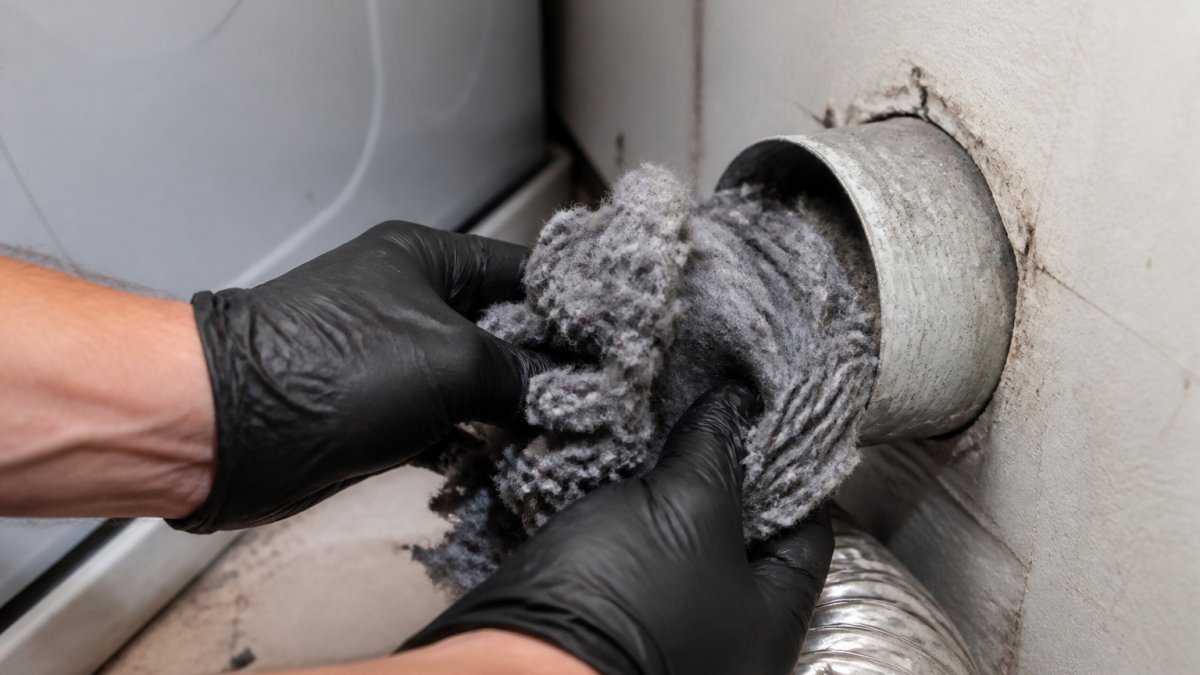
If you find a clogged vent, it needs professional cleaning. Dryer vent cleaning in Orlando, Kissimmee & St. Cloud removes lint buildup from the entire vent system, restores proper airflow, and allows your dryer to heat normally again.
Before assuming a heating component failed, confirm you’re using the correct cycle settings, some cycles don’t use heat at all.
Air dry or air fluff cycles run the motor but not the heating system.
Select a timed dry or high heat cycle instead; these activate the heating system and should produce warm air.
If your dryer has a temperature setting, switch from low to high heat and run a test cycle.
Electric dryers make heat with a heating element, a resistance coil that glows red when powered. It only receives power when the control board, thermal fuse, and thermostats all agree the dryer is safe to heat, which is why an electric dryer can tumble and blow air all day and never warm up.
This check explains a surprising share of no-heat calls. An electric dryer needs two 120-volt hot legs (a 240-volt circuit) plus a neutral. If one leg is lost, a half-tripped double-pole breaker, a loose lug, or a burned cord terminal, the motor still runs on the remaining 120 volts, but the element gets no power and the dryer never heats.
The heating circuit is a series chain: control board → thermal fuse → high-limit thermostat → heating element → operating thermostat. Test each link with the dryer unplugged, using continuity or resistance (ohms).
Replacing a heating element is straightforward but requires removing panels and handling 240-volt wiring. If any step feels beyond your comfort level, stop and call a professional, a service call costs far less than an improper repair.
A gas dryer makes heat with a burner. The sequence is precise: the control board calls for heat, the igniter glows, the flame sensor confirms it’s hot, the gas valve opens, and the burner lights. If any link fails, the drum turns and air blows, but no flame, and no heat, appears.
The sounds during the first minute tell you where the sequence is breaking:
If gas supply, power, and airflow check out and the burner still won’t light, the fault is inside the ignition or gas valve system. A technician can test the igniter, flame sensor, and valve coils and confirm the exact failed part, preventing the common, expensive mistake of replacing an igniter when the real problem is a $20 set of valve coils, or vice versa.
If you’ve completed the steps above and your dryer still produces no heat, a component inside the heating system has failed, professional repair is your best option.
Heating elements, thermal fuses, igniters, and thermal sensors require disassembly to access and test, and incorrect installation can damage the dryer or create electrical or gas hazards.
Dryer repair in Orlando, Kissimmee & St. Cloud provides professional diagnostics and repair for dryers that aren’t heating.
Book appliance repair in Central Florida to schedule a same-day or next-day appointment.
Start by checking the lint screen, a blocked screen is the most common reason a dryer runs but no heat reaches your clothes. Remove and clean the lint screen thoroughly, then run a short cycle to feel inside the dryer drum for warmth. If you feel no heat, check that you selected a heated cycle (not air-dry mode) and verify the temperature setting is not set to low. If these steps don’t restore heat, the dryer vent may be clogged or an internal component needs inspection.
Yes. A clogged vent restricts airflow, which causes the dryer to overheat internally and trigger a thermal safety switch that cuts power to the heating element. This protects against fire but leaves your clothes damp. Check the vent outlet outside your home, if lint is blocking the opening or the ductwork feels blocked, clear the obstruction. A professional vent cleaning service can remove stubborn lint buildup deep inside the duct system.
Electric dryers use a heating element powered by electricity; if it fails, no heat is produced. Gas dryers ignite a gas burner to create heat; if the igniter fails or gas supply is cut off, they won’t heat. Both types share common issues like clogged vents and blocked lint screens, but the internal heating mechanism is different. Gas dryers also have a gas supply line and igniter that electric models don’t have, so diagnosis paths diverge after ruling out airflow problems.
Call a professional if cleaning the lint screen and vent doesn’t restore heat, if you’re uncomfortable testing electrical components with a multimeter, or if you suspect a gas supply issue. Heating element replacement, thermal fuse testing, and igniter diagnosis require technical skill and tools. Professional technicians provide upfront estimates before beginning work, so you can make an informed decision without risking further damage or safety hazards from DIY disassembly.
A dryer that runs but produces no heat is frustrating, but the cause is usually one of a few common issues: a clogged lint screen, a blocked vent, or a failed heating component. Start with the simple checks, lint screen and vent inspection, before moving to internal diagnostics. If troubleshooting doesn’t restore heat, contact Ramex ProFix for professional repair service and get your dryer back to working order with minimal disruption to your household.
